01
NEW TRAINING
300 WINCHESTER MAGNUM
Long-range shooting modules
Real-world readiness training for uncertain times.
Choose the areas of preparedness that matter most to you and build practical knowledge you can use when circumstances change.


Trauma, first aid, health preparedness, and response.
When normal medical support is delayed or unavailable, preparation matters. Build practical knowledge for recognizing emergencies, responding under pressure, and becoming more capable before help arrives.
I served as a Paratrooper Flight Medic in the 160th Special Operations Aviation Regiment — the Night Stalkers. I earned the Combat Medical Badge twice, the Expert Field Medical Badge, and the Air Medal.
While serving part time in the Army National Guard as a medic I went to school and became a Registered Nurse on the civilian side. I deployed to Afghanistan with the 76th Infantry Brigade Task Force Phoenix. When I came home I went on to become a Family Nurse Practitioner. By the time I retired from the Guard I had been a practicing FNP for years.
This program was built for every prepper and survivalist — whether you are brand new to this or have been at it for years. Because no matter where you are on this journey, there is always more to know.
Now Available · City Survival Guides
Get lifetime access to the complete City Survival Guides library — multi-hour, city-specific video dossiers built around the terrain, infrastructure, threats, routes, and decisions that matter when normal life stops working.
$97 · Lifetime Access
Explore City Survival GuidesSee the full library, what every guide covers, and how the City Survival Guides work.

New training, resources, and preparedness intelligence are continually being added to the Total Preparedness Program.
Long-range shooting modules
City Survival Guide
72+ new modules
He lived it. He trained for it. He practiced it.
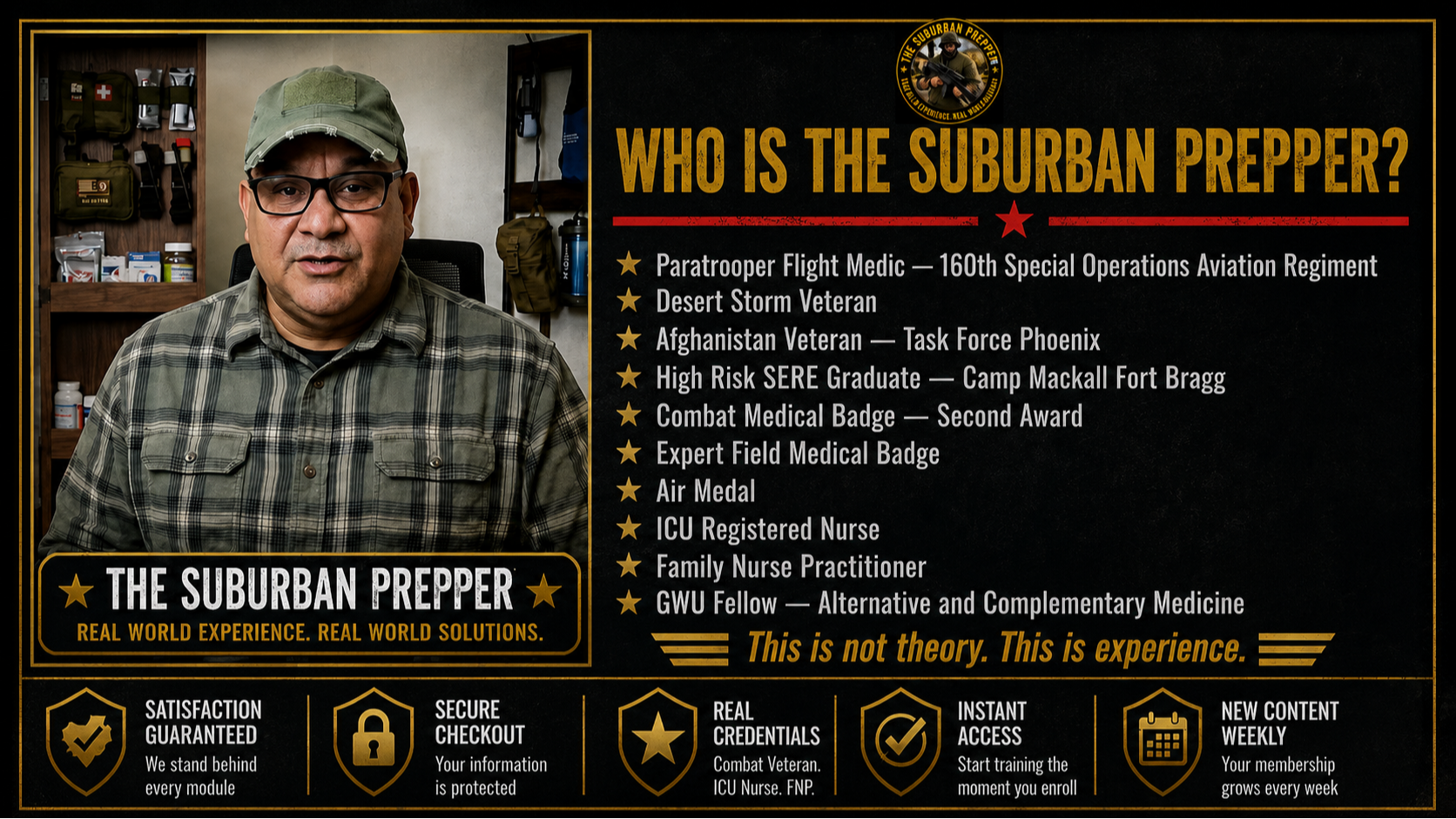
The Suburban Prepper is not a YouTuber who read a book about survival. He is a Paratrooper Flight Medic who flew with the 160th Special Operations Aviation Regiment — the Night Stalkers — and deployed to both Desert Storm and Afghanistan.
He is a High Risk SERE graduate out of Camp Mackall at Fort Bragg. He holds the Combat Medical Badge with a second award, the Expert Field Medical Badge, and the Air Medal.
After the military he became an ICU Registered Nurse, then a Family Nurse Practitioner, and completed a Fellowship in Alternative and Complementary Medicine through George Washington University. Decades of treating real patients in real emergencies shaped the way he approaches preparedness.
The Total Preparedness Program was built from that experience — not from theory, not from other YouTube channels, not from books. From two combat deployments and decades of real operational and clinical knowledge compressed into a preparedness training platform for the prepared civilian.
This is not theory. This is experience earned through military service, medical practice, specialized training, combat deployments, and years of teaching preparedness to others.

Preparedness, survival, and real-world readiness.
VISIT CHANNEL ↗
Preparedness content from the wider network.
VISIT CHANNEL ↗
Alternative and complementary medical preparedness.
VISIT CHANNEL ↗
Medical readiness and emergency response education.
VISIT CHANNEL ↗
Veteran perspective, preparedness, and experience.
VISIT CHANNEL ↗
Suburban Prepper's Rumble presence.
VISIT RUMBLE ↗The Total Preparedness Program brings medical readiness, survival skills, preparedness training, self-reliance, and continuously expanding resources together in one platform built for the prepared civilian.
Start building your preparedness library with ongoing access to Total Preparedness Program training and resources.
JOIN TPP MONTHLY →Get lifetime access to the Total Preparedness Program and continue learning as the program grows.
GET LIFETIME ACCESS →
Get started today before this once in a lifetime opportunity expires.
